


Literacy Centers Made EASY!
For years now, I’ve been using the same “menu” format for Literacy Centers and have modified it as I’ve taught first, second, and third grade. Prior to that, I’d tried every system in the book…stations in the classroom, mobile tubs, wheels, rotated charts, assigned centers…all of which “worked” for the most part, BUT left me with the same PROBLEMS:
- I felt as if I was CONSTANTLY changing centers and having to search for new ones. (Who has time for that?!)
- When centers were “assigned,” lower kids had trouble keeping up and finishing in their allotted “time slot.” Either that or my high kids finished in no time and got bored.
- The quality of work that students completed was substandard.
After my mentor and literacy trainer, Julie Winchester, introduced me to the “menu” center system during my fifth year of teaching, I decided to give it my own spin and give it a try with my first graders. I’m now more than 20 years into teaching AND I’VE NEVER LOOKED BACK!!
What you need
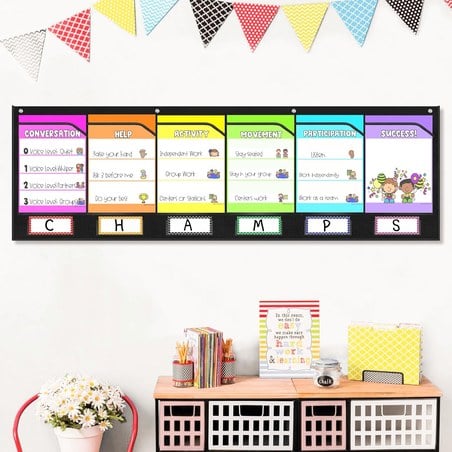
All you’ll need to purchase/find is one pocket folder per child and a large pocket chart similar to the following:

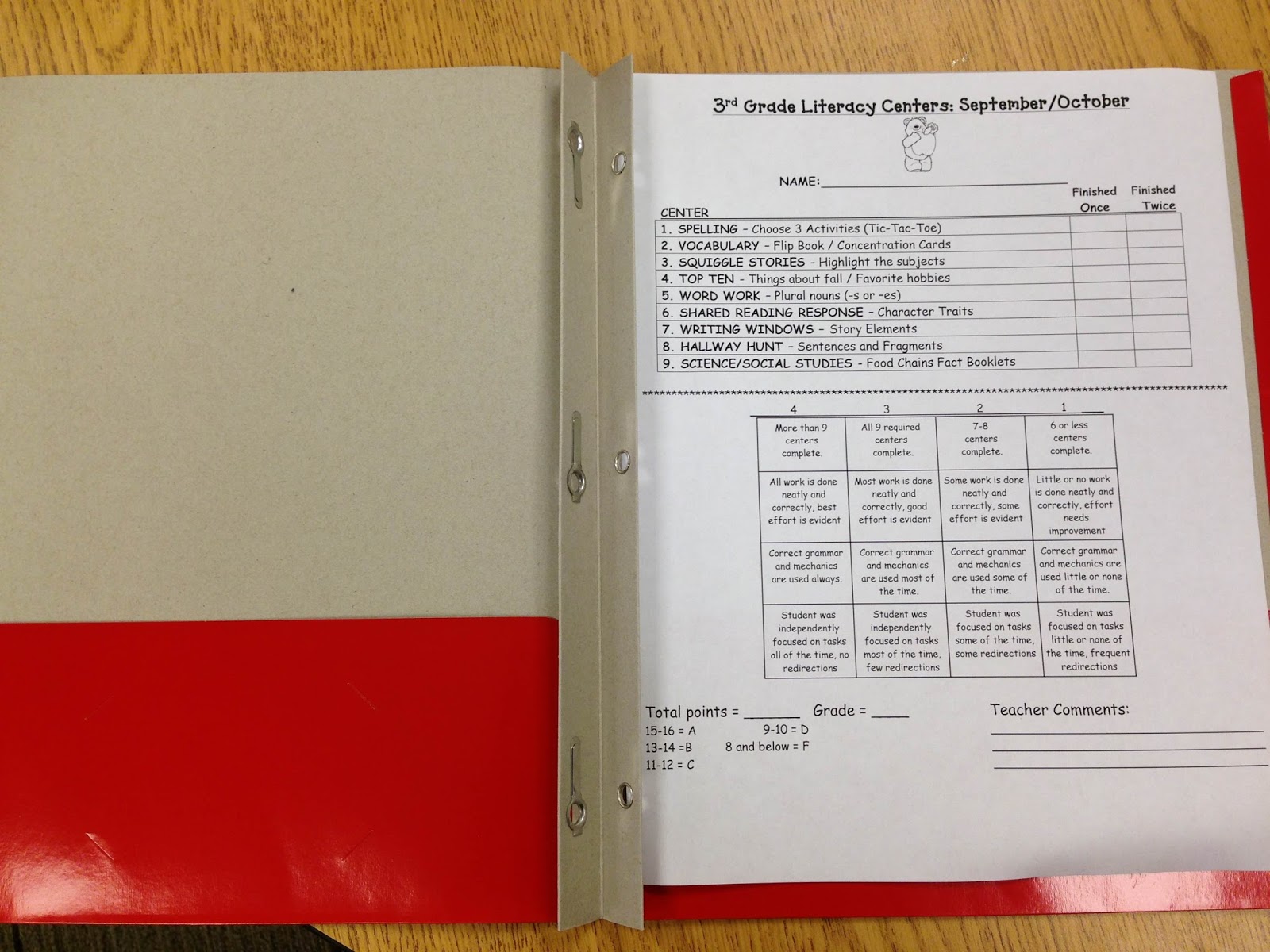
Here is one of my kid’s Center folders set up with the tracking chart/rubric inside:

Why this system works
Here are some of the MANY BENEFITS of this center system:
- Centers stay the same but TOPICS within each center change. This sets students up to be engaged and SUCCESSFUL because they know and practice the formats on a regular basis!
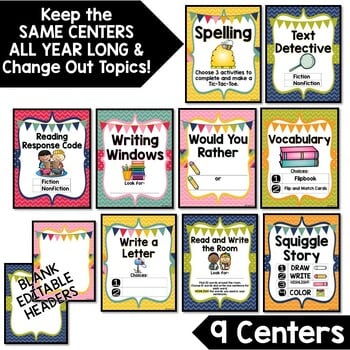
- Students complete the centers AT THEIR OWN PACE and in WHATEVER ORDER THEY CHOOSE! Say what?!! It works beautifully…Since there is a variety of choices, your lower kids can take as much time as they need and higher kids can complete as many as they choose.
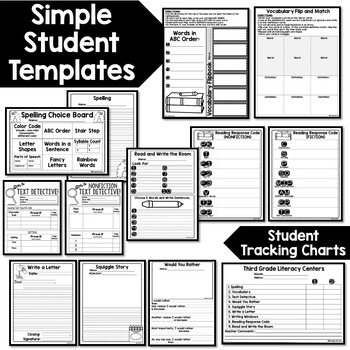
- Most centers are open-ended, so students can take it as far as they’d like.
- Since there are two options provided per center, each one can be completed twice.
- Centers need to be changed every 3-4 WEEKS as opposed to every 1-2 weeks! This is my favorite part of this system because it makes teacher management a snap.
- Centers are graded as a whole (according to rubric) instead of individually.
I showcase “example centers” for kids’ best quality work inside this binder in page protectors and try to add several centers each month.

Literacy Centers Made EASY! for every grade
Ready to try the menu system in your own classroom? I’ve built a complete set for each grade level, Kindergarten through fifth grade, with the centers, headers, student templates, tracking chart and rubric all done for you. Click your grade to see it on TPT!
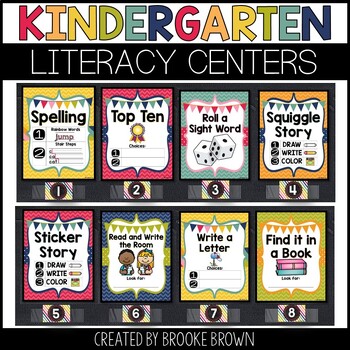 KindergartenSee it on TPT
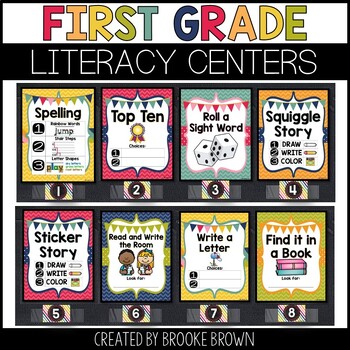 First GradeSee it on TPT
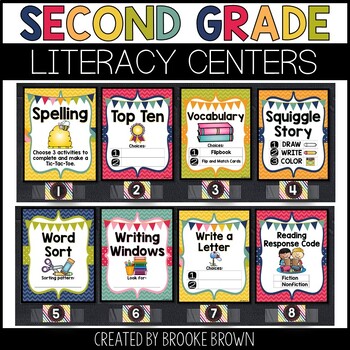 Second GradeSee it on TPT
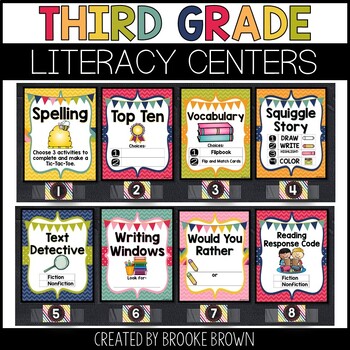 Third GradeSee it on TPT
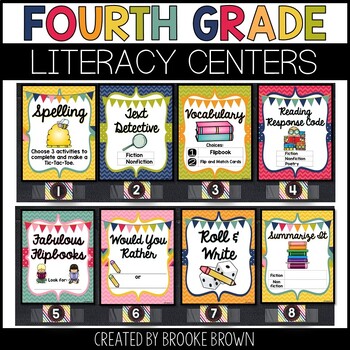 Fourth GradeSee it on TPT
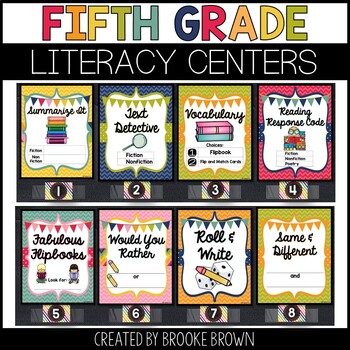 Fifth GradeSee it on TPT
Each grade-level set includes:
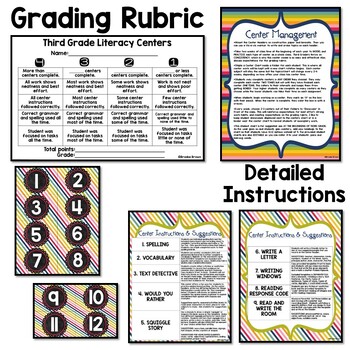
- Detailed center instructions, management and display suggestions
- Color “headers” for your pocket chart, plus 2 EDITABLE headers so you can add your own centers
- Black-line student templates for every center
- Student tracking chart
- Grading rubric
Incorporating literacy centers into my classroom truly elevated my English instruction–they added a fresh layer of engagement while remaining incredibly easy to manage and track. Not only did these centers enhance my teaching, but they also brought so much joy and excitement to my students’ learning experience. If your students loved these literacy centers as much as mine, I highly recommend checking out another creative favorite: Phonics with Paint Trays! This hands-on activity sparked curiosity, boosted creative flow, and opened up a new world of literacy exploration!
This post contains affiliate links. If you buy through them, Teach Outside the Box earns a small commission at no cost to you.