
Top 10 Reading Manipulatives for Hands-on Reading
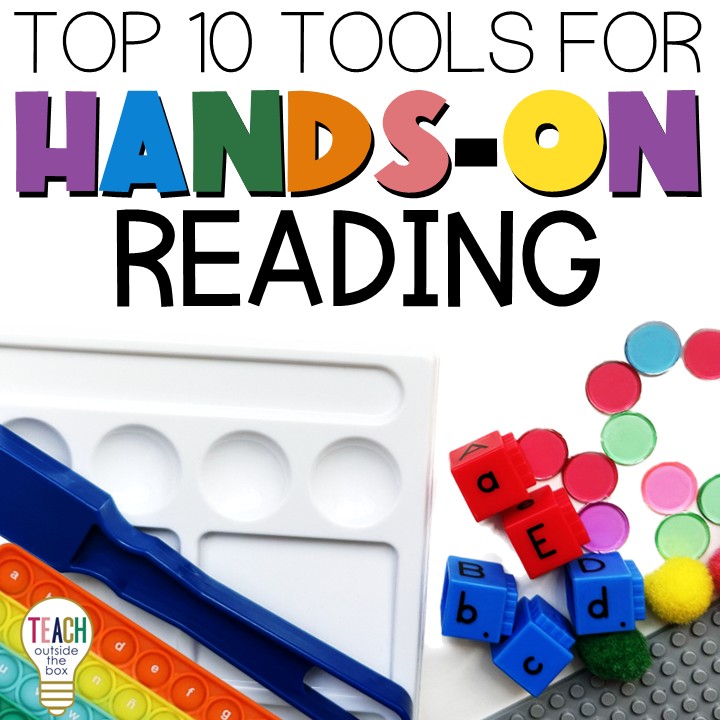
Reading manipulatives are hands-on tools that students touch, move and build with while they practice reading, like letter cubes, magnetic chips, poppers and paint trays. These are the 10 I love most for phonics, fluency and comprehension in K–3 small groups and literacy centers, counting down to #1!
The tools, counting down
10. Pointers

Fun pointers are a great way to help our kids track as they read! You can also use them as a warm-up or exit activity during small groups by having students “search and find” a specific type of word or sound. (i.e. Point to a word with a digraph, Find a compound word, Point to a past tense verb)
Rainbow mini pointersFinger lightsMini wandsWitch fingers
9. Word Highlighters

These colored word highlighters are awesome for highlighting key words, context clues, text evidence, and more! Students can also use them to track as they read.
8. Poppers

Poppers, or “fidget toys” took the world by storm a few years back, and teachers quickly set to work figuring out innovative ways to incorporate them into our instruction. This phonics popper is one of the coolest versions that I’ve seen because it includes letters, blends, digraphs, diphthongs, vowel teams, and more! You can call out a specific word or sound and students can “pop” the matching graphemes.
7. Letter Cubes

These letter cubes include both capital and lowercase letters and are color-coded to distinguish vowels from consonants. They’re perfect for word building in small groups and literacy centers!
6. Mini Cups

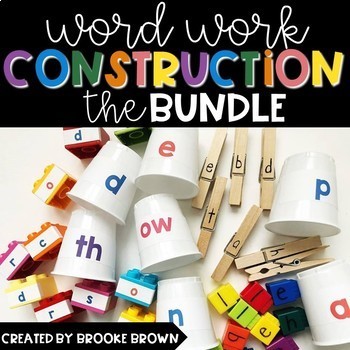
As a STEM teacher, I LOVE using mini cups for engineering, but they are also a fun and engaging option for word work! You can stick address labels with letters and graphemes on the front, and even better? The white plastic mini cups are actually write and wipe, so students can write and erase directly on the cup! Check out my Word Work Construction with Mini Cups templates that fit the cups perfectly.
Mini Cups Word Work Construction
This one is part of the Word Work Construction BUNDLE on TPT, which puts all 4 together in one download.
5. Magnetic Wands and Chips

These magnetic wands and chips are a favorite for orthographic mapping! Students can use any elkonin box template to write words, place the magnetic chips over or underneath the graphemes, and then use the magnetic wands to swipe across the chips and say each phoneme aloud.
4. Bead Slides
Pipe cleaners and beads are one of my favorite ways for students to practice blending and segmenting sounds! Students simply slide a bead from one side to the other for each sound they hear, and they work just as well for counting syllables, words and sentences. They’re inexpensive to make, and you can use them over and over!
3. Alpha Briks

How cool are these building brick letters?! These Alpha Briks make an awesome literacy center that your kids will love. Grab the FREE and editable template below:
2. Paint Trays

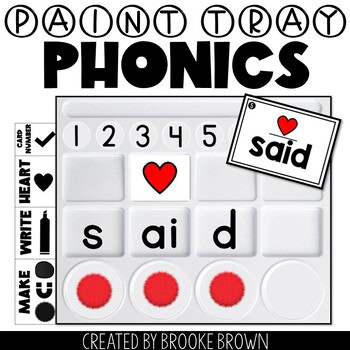
These write and wipe Paint Trays from Amazon are the BEST tool for small group reading because the possibilities are endless for all the literacy skills that you can incorporate!
How Paint Tray Phonics Works
- The teacher presents the task card and pattern to the student or small group.
- Students build the word on their paint tray using grapheme cards and red/blue vowels and consonants.
- On the bottom row, students make each phoneme by placing pom pom balls or mini erasers on the tray, squishing playdough balls, or picking up magnetic chips with a wand.
- Students write the matching graphemes with a dry erase marker. They may also write the word on the provided recording sheet.
- Students check off or write the number of the task card on the top row. (This is also a great way for them to stay on track during literacy centers!)
All the grapheme cards are color-coded, so students can easily recognize patterns. Task cards with pictures and letter prompts are included for each grapheme. After students are familiar with the spelling pattern, you may choose to cover up the prompts on the right side of the card and have students build the words using only pictures. You may also choose to give them a grapheme card, then have them generate as many words as possible on their paint trays.

Amazon paint traysPaint Tray Phonics: Core PackContractions paint tray phonicsCompound words paint tray phonicsInflectional endings paint tray phonics
1. Reading Construction Toolkits

Looking for an all-in-one toolkit that includes a variety of hands-on literacy manipulatives, plus engaging lessons for comprehension and word work?! Check out my Reading Construction Toolkits from hand2mind in three differentiated grade level bands. They contain a teachers resource book, instruction cards and enough hands-on materials for four students to use at once!
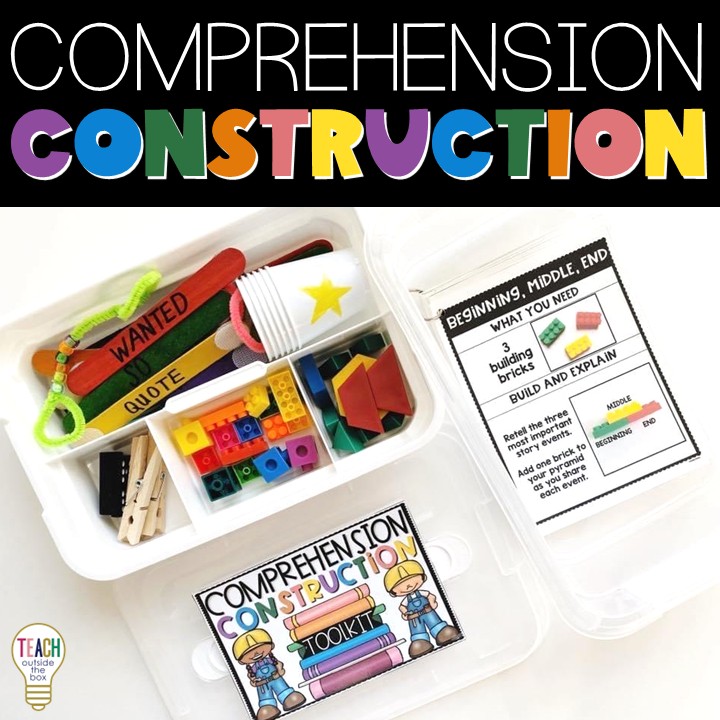
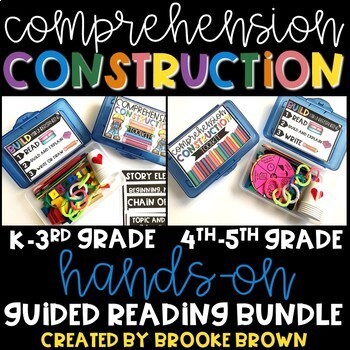
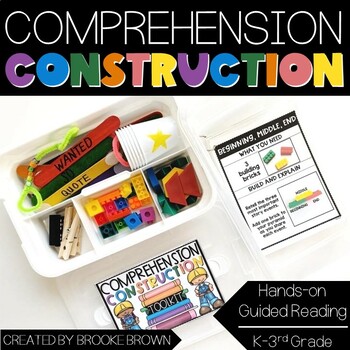
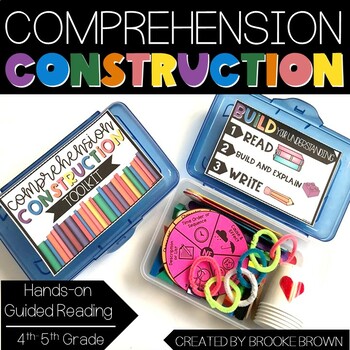
Also, check out my Comprehension Construction Toolkits with printable components to assemble your own hands-on literacy boxes.
If these tools brought value to your classroom, consider pairing them with my “Simple Strategies for Hands-On Literacy”. Together, they’ll help you build an engaging, interactive environment where insightful ELA learning can thrive. It’s a great way to make literacy instruction effective and exciting for your students!
K-3rd Grade Comprehension Construction4th-5th Grade Comprehension Construction
Want them all? The Comprehension Construction BUNDLE on TPT has all 3 in one download.
Reading Manipulatives FAQ
What are reading manipulatives?
Reading manipulatives are hands-on tools that students touch and move to practice reading skills, such as letter cubes, magnetic chips and wands, poppers, building brick letters and paint trays. They turn phonics, word work and comprehension practice into something kids can build and see.
How do I use reading manipulatives in small groups?
Give each student a tool and a quick task, like building a word with letter cubes, popping the matching graphemes on a phonics popper, or placing a magnetic chip for each sound. I also use pointers for a quick “search and find” warm-up or exit activity, such as “Point to a word with a digraph.”
What grades are these reading manipulatives for?
Most of the tools on this list are made for K–3 small groups and literacy centers. My Comprehension Construction sets come in K–3rd and 4th–5th grade versions, and the Reading Construction Toolkits come in three grade-level bands, so older readers can join in too.
Can I make my own reading manipulatives?
Yes! Stick address labels with letters on mini cups, slide beads on a pipe cleaner for each sound, or make rhyming magnets from popsicle sticks and sticky magnets. You can also grab my free, editable Alpha Briks template on this page.
More Hands-on Literacy on TPT
The paint tray, cup and comprehension sets that go with these tools are all on TPT. Click one to see it on TPT!
This post contains affiliate links. If you buy through them, Teach Outside the Box earns a small commission at no cost to you.