


Low Prep Winter STEM Activities
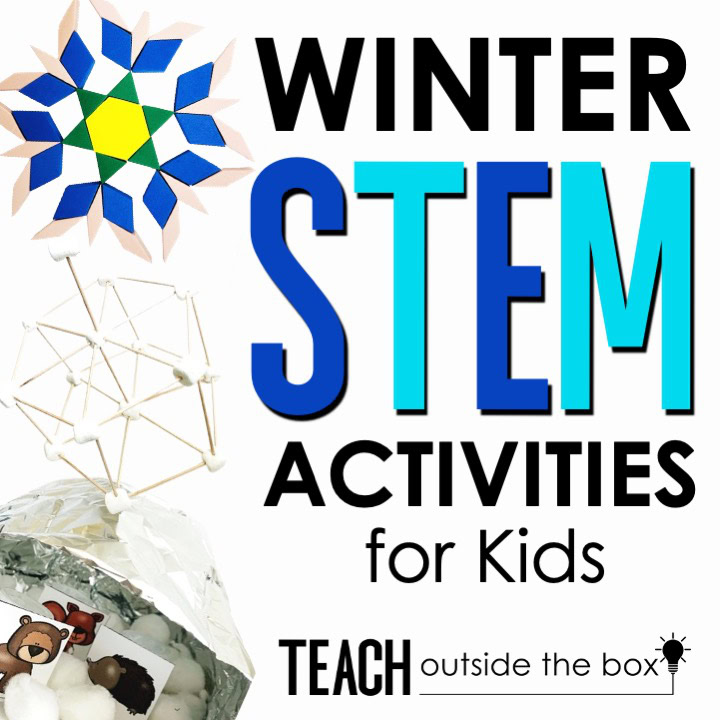
Winter Break is over, the kids are back, and it’s FREEZING outside! January is the perfect time for some engaging, snowy STEM activities. Snow, sledding, and hibernating animals give us endless possibilities for hands-on engineering, and these challenges keep students building, testing, and collaborating all the way through winter.
Best of all, every one of them is LOW PREP for you! Here are my favorite winter STEM activities, with a quick look at what’s included in each one so you can pick what fits your classroom.
These winter STEM challenges work for kindergarten through 5th grade!
January STEM activities:
1. Sledding Ramp STEM Challenge
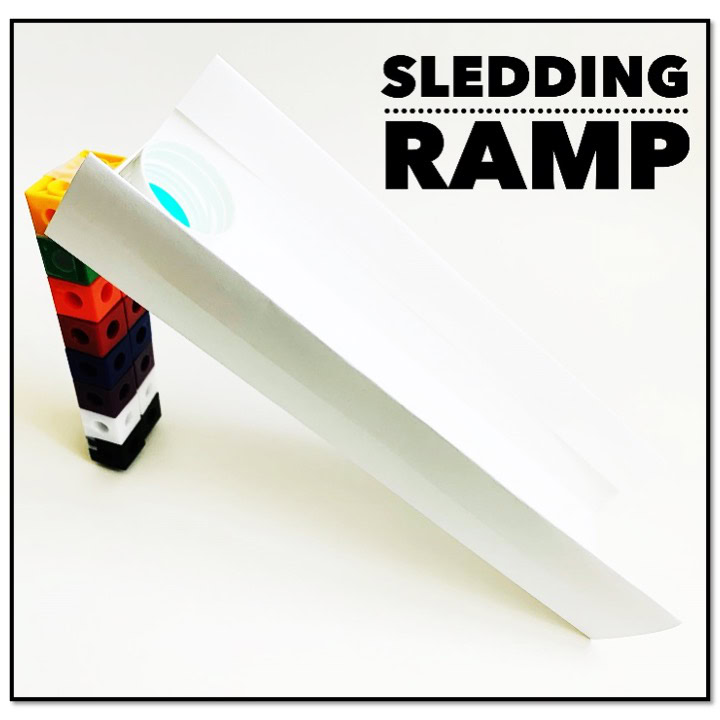
Nothing says January like a snow day on the sledding hill! The Sledding Ramp challenge turns that excitement into a hands-on lesson for inclined planes. Students use snap cubes, cardstock, and tape to create their ramps and a simple plastic lid or cap for the sled. My students love to test different heights and slopes of their ramps!
My Sledding Ramp STEM Challenge includes a detailed lesson plan with standards, a supply checklist, suggested read alouds, a key visual vocabulary chart, student instructions, QR code research videos, a grading rubric, and a supply request letter for parents. The recording sheets come in K–1st and 2nd–5th versions, so it’s easy to differentiate across multiple grade levels.
2. Hibernation Station STEM Challenge
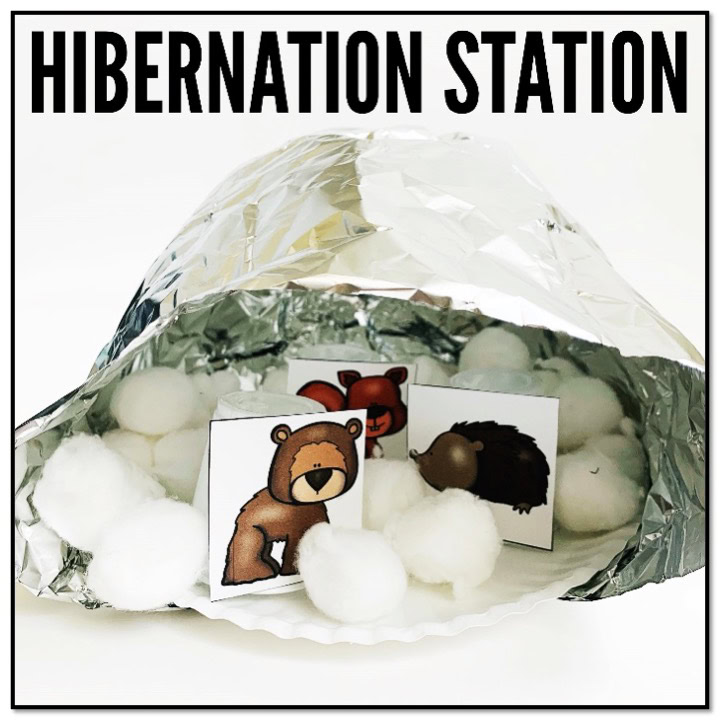
Hibernation Station is a fan favorite STEM activity all about animals in winter. It supplements cozy read alouds such as Cozy by Jan Brett, A Loud Winter’s Nap by Katy Hudson, and Bear Snores On by Karma Wilson. Students use paper plates, aluminum foil, cotton balls, and paper animals to create a cozy den for the hibernating animals!
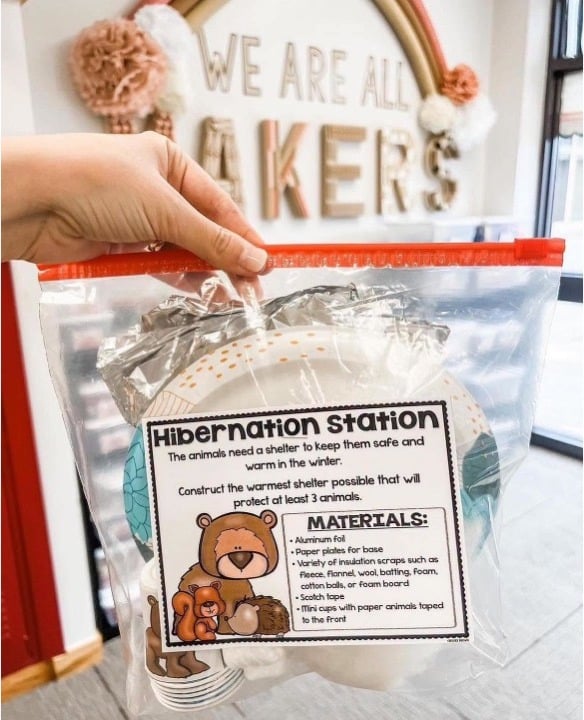
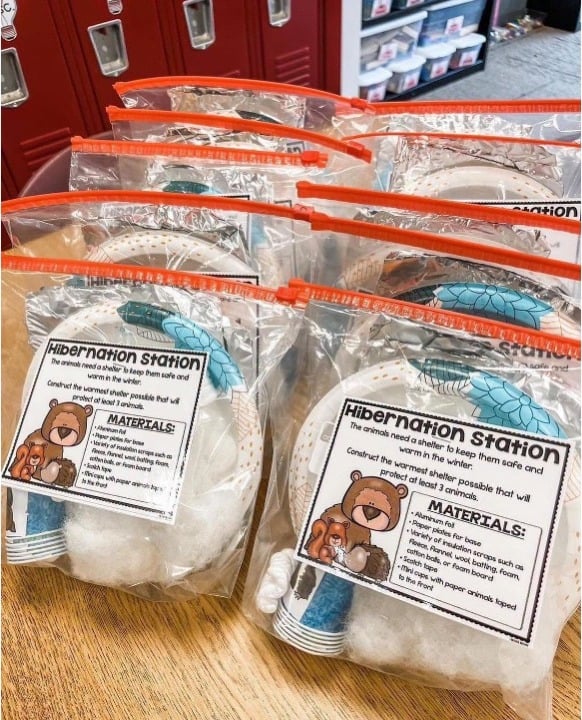
Just like the Sledding Ramp, Hibernation Station comes with a lesson plan, a digital anchor chart, a photo of a possible product, a reflection discussion chart, and differentiated recording sheets for K–1st and 2nd–5th.
3. Snowball Structure STEM Challenge
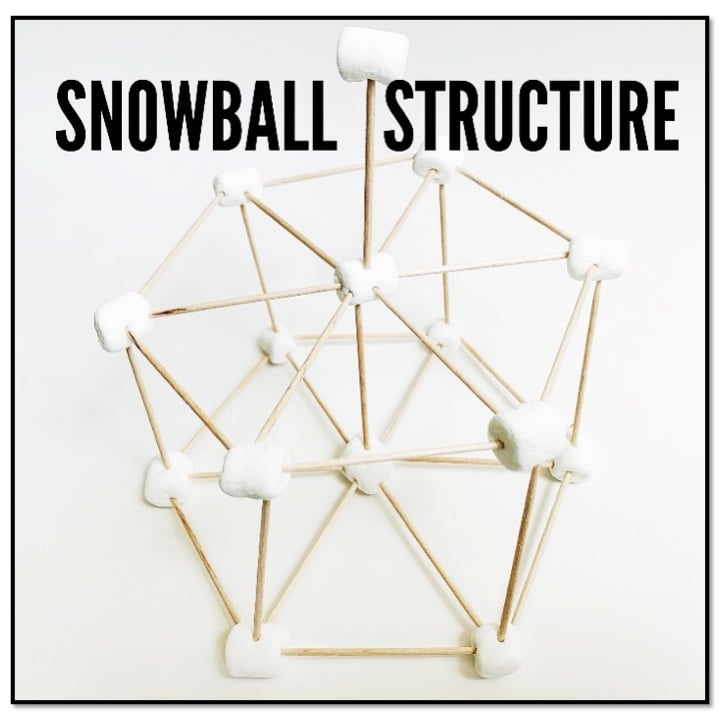
Snowball Structure brings math into the mix as students build 3D solid marshmallow and toothpick towers. It’s also a fun winter party station! You can also use styrofoam packing peanuts as an alternative to marshmallows.
Sledding Ramp, Hibernation Station, and Snowball Structure come together in my Winter STEM Activities & Challenges (January) bundle, along with a Bonus Brainbuilder with pattern blocks: Snowflake Symmetry. You can use them as stations or one at a time, and each challenge has the same lesson plan, research videos, and K–1st and 2nd–5th recording sheets.
4. Snowball Slingshot Math Stations
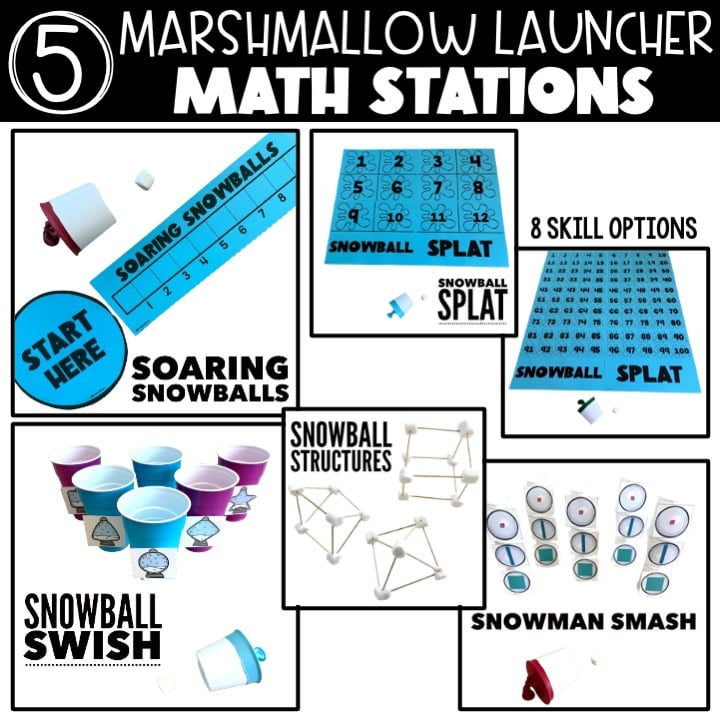
Want to add a little competition to math? With Snowball Slingshot, students construct a simple Marshmallow Launcher out of a 3-oz plastic mini cup and a 7-inch balloon, then launch mini marshmallows or white pom pom balls to practice math skills. Lots of differentiated skill options are included for BOTH lower and upper grades:
- Snowball Splat: names for a number, comparing numbers, addition and subtraction facts, two-digit addition and subtraction (2nd grade and up), and multiplication (upper grades)
- Soaring Snowballs: measurement, plus data analysis for upper grades
- Snowglobe Swish: tally and graph, or place value and expanded form
- Snowman Smash: place value, or decimals for upper grades
- Bonus Snowball Structures: 2D shapes and 3D solids
Model each station with your class first. Then 4–6 students can work at a station at a time, for about 15–20 minutes each. Every station has a card tent with instructions and student recording sheets, and they also double as winter party games!
5. Winter STEM Bins® Teambuilders
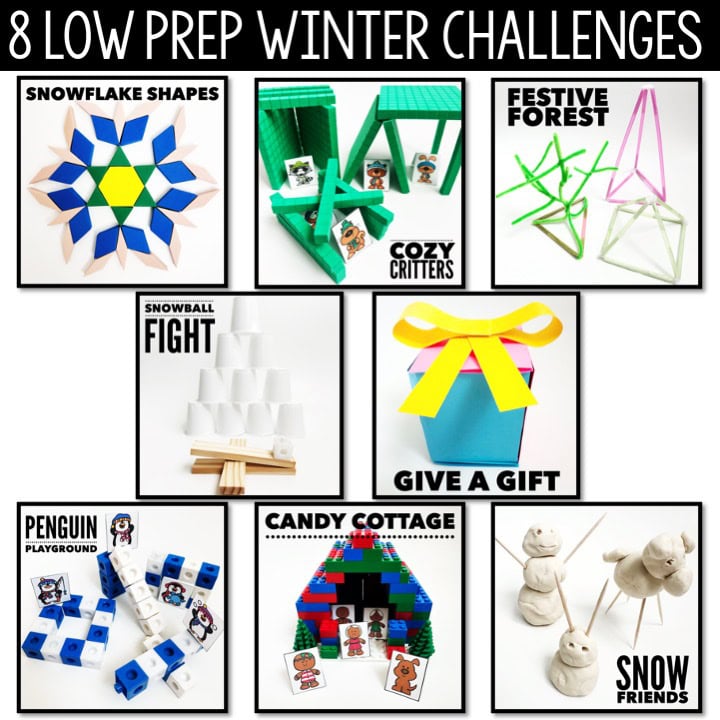
Winter STEM Bins® Teambuilders are designed to foster student collaboration and build your classroom community during December and January. Just what we need before and after Winter Break! There are 8 winter themed STEM Stations, including Snowflake Shapes, Cozy Critters, Snowball Fight, Penguin Playground, and Snow Friends.
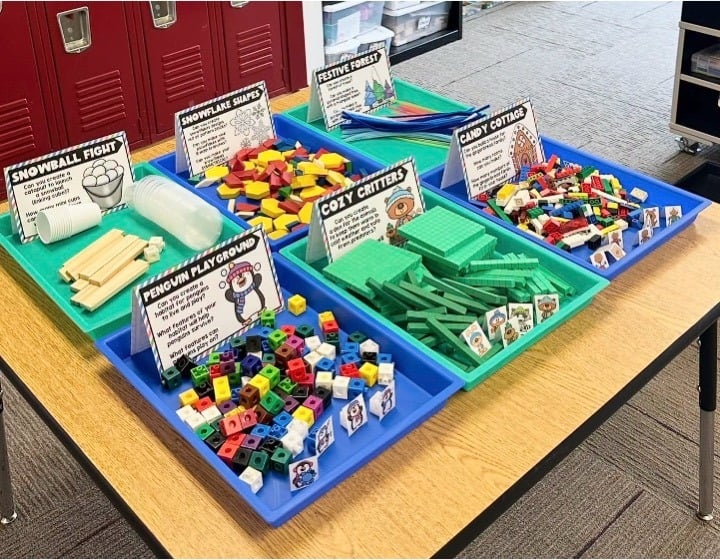
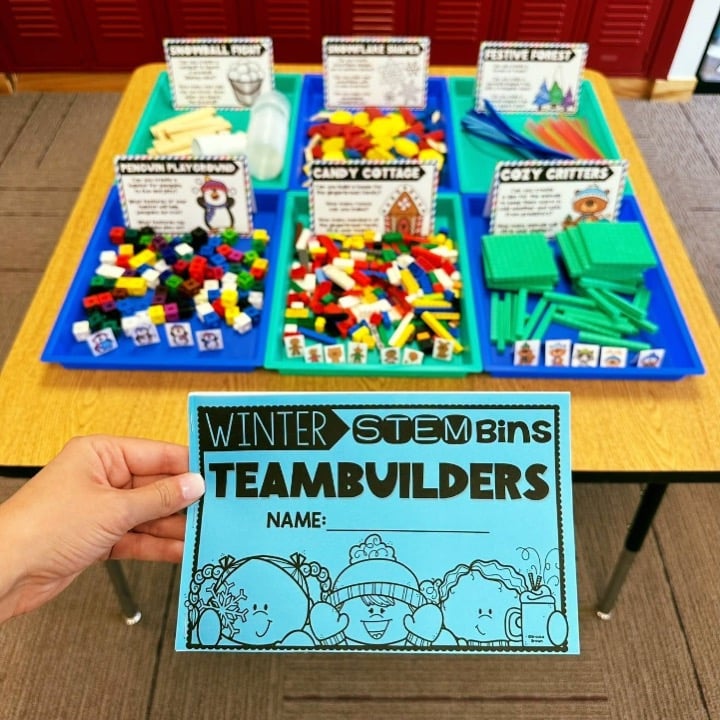
Each challenge uses your existing classroom set of STEM Bins® plus a few basic classroom materials. Set them up as stations or use one as a weekly class challenge. Students work in groups of 2–4 for at least 20–25 minutes per station, and each student booklet has space to draw blueprints and record data. Both lower grade (K–1st) and upper grade (2nd–5th) versions are included.
6. Winter Read Aloud STEM Activities
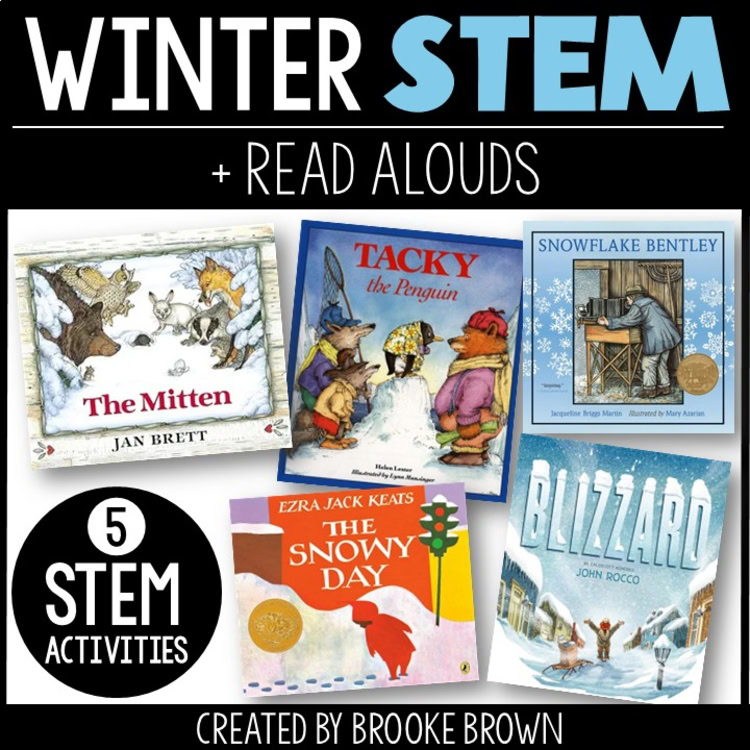
Winter picture books and STEM are a perfect match! Each of these low prep lessons pairs a read aloud with a hands-on activity:
 The Mitten by Jan Brett (get the book): “Mitten Measurement,” a nonstandard measurement activity designed for K–2nd grade
 Tacky the Penguin by Helen Lester (get the book): a “Penguin Hideout” challenge designed for K–3rd grade
 Snowflake Bentley by Jacqueline Briggs Martin (get the book): a coffee filter “Paper Snowflake” activity
 The Snowy Day by Ezra Jack Keats (get the book): playdough “Snow Play” activities, an animal track matching game, and a student recording booklet
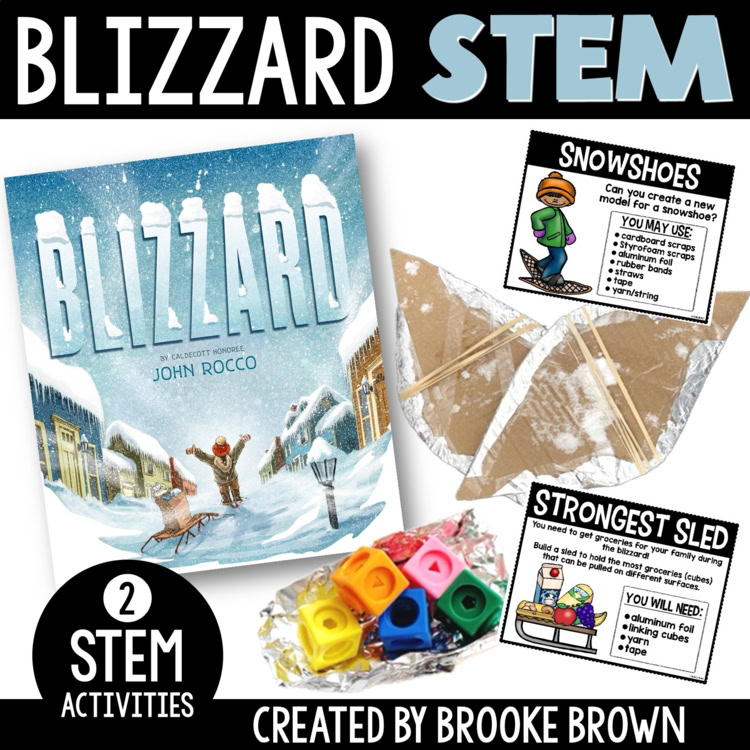 Blizzard by John Rocco (get the book): a “Strongest Sled” activity (friction and weight) and a “Snowshoes” engineering challenge
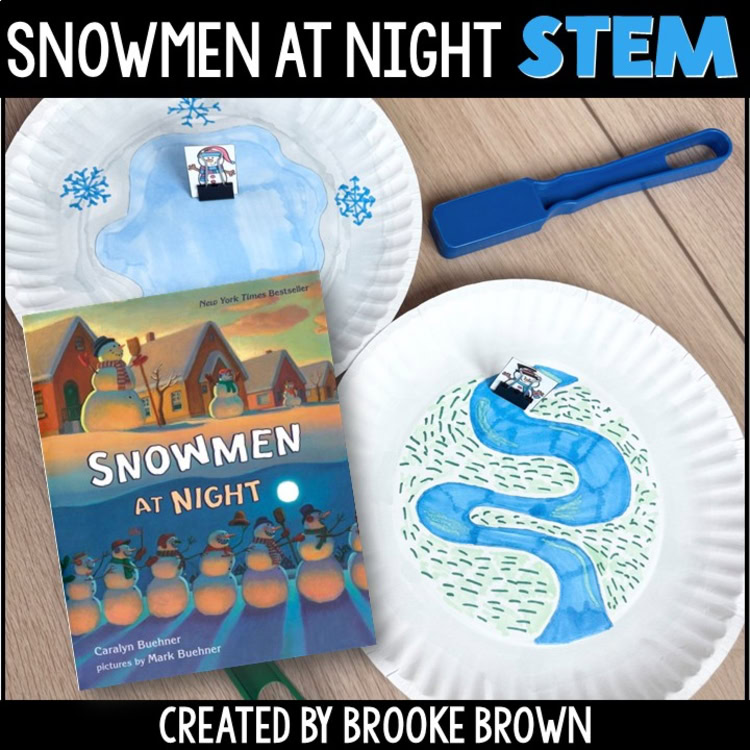 Snowmen at Night by Caralyn Buehner (get the book): students create an ice skating rink and snow slide for a magnetic snowman, with 4 writing extension options
Each one includes a lesson plan or key vocabulary, video links, and a student recording sheet, template, or booklet.
Want five winter STEM activities to supplement your favorite winter read alouds? The Mitten, The Snowy Day, Snowflake Bentley, Tacky the Penguin, and Blizzard come together in my Winter STEM Activities + Read Alouds set.
7. Snowman Unplugged Coding

Snowman Coding is a simple winter-themed introduction to block-style coding for kindergarten through third grade, with no computers needed! Partners take turns: one student arranges map pieces on the Snowman Coding Map, from the Snowman to the Mountains, and adds a piece of clothing, a bridge, a hill, and an enemy along the path. The other student writes the code on the “Crack the Code!” sheet using the direction symbols. Then they check, coach, and trade places.
Tip: slip the “Crack the Code!” sheets into clear page protectors so you can reuse them. After unplugged practice like this, students can apply the same block coding strategies on sites and apps such as code.org and Kodable.
8. STEM Bins® Build & Write for January

STEM Bins® Build & Write (January) combines simple engineering tasks with writing prompts for first through third grade. The January set has four building tasks: build a snowman, a snowflake, an igloo, and an animal den. Each task has a photo task card, video links, and three writing prompts.
Paired with your STEM Bins®, they’re perfect for hands-on literacy centers. Printable, Google Slides, and Seesaw versions are included.
How I Use Them in January
- Centers and stations: The winter challenges and Teambuilders work as rotating stations, or pick one for the whole class.
- Indoor recess and winter parties: Snowball Slingshot and Snowball Structure are easy to pull out when it’s too cold to go outside.
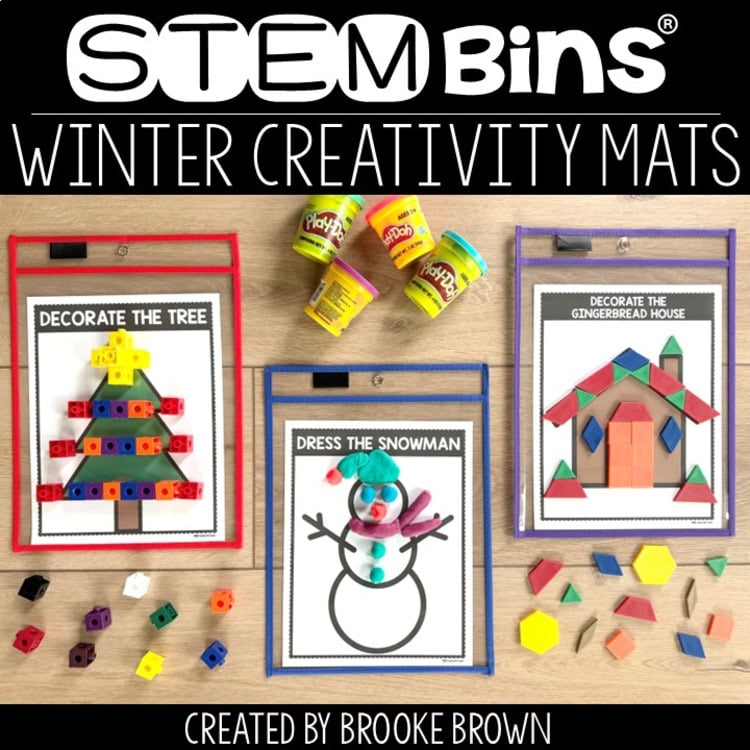
- Early finishers and soft starts: My Winter STEM Bins® Creativity Mats are perfect! Laminate them or slip them into page protectors, and students decorate them with playdough, pattern blocks, snap cubes, LEGO, Brain Flakes®, Hashtag Blocks, mini magnetic tiles, or magnetic cubes. There are 16 winter mats, 4 Valentine’s Day mats, and 5 open-ended winter scenes.
Still in December? Check out my Low Prep Christmas STEM Activities first!
Planning ahead for February? Check out my Low Prep Valentine’s Day STEM Activities next!
Looking for a free winter treat for your class? My free Marshmallow Launcher kit is waiting in my Free Resource Library. Sign up here to get it, plus all my other freebies!
More Winter STEM on TPT
Looking for more low prep winter STEM? These are my go-to January sets. Click one to see it on TPT!



This post contains affiliate links. If you buy through them, Teach Outside the Box earns a small commission at no cost to you.